
How to Use CleanFreight to Save Money
Learn how trucking fleets can find fuel waste using existing telematics data by identifying idle waste, non-idle fuel loss, high-consumption vehicles, efficiency drift, and recoverable savings.
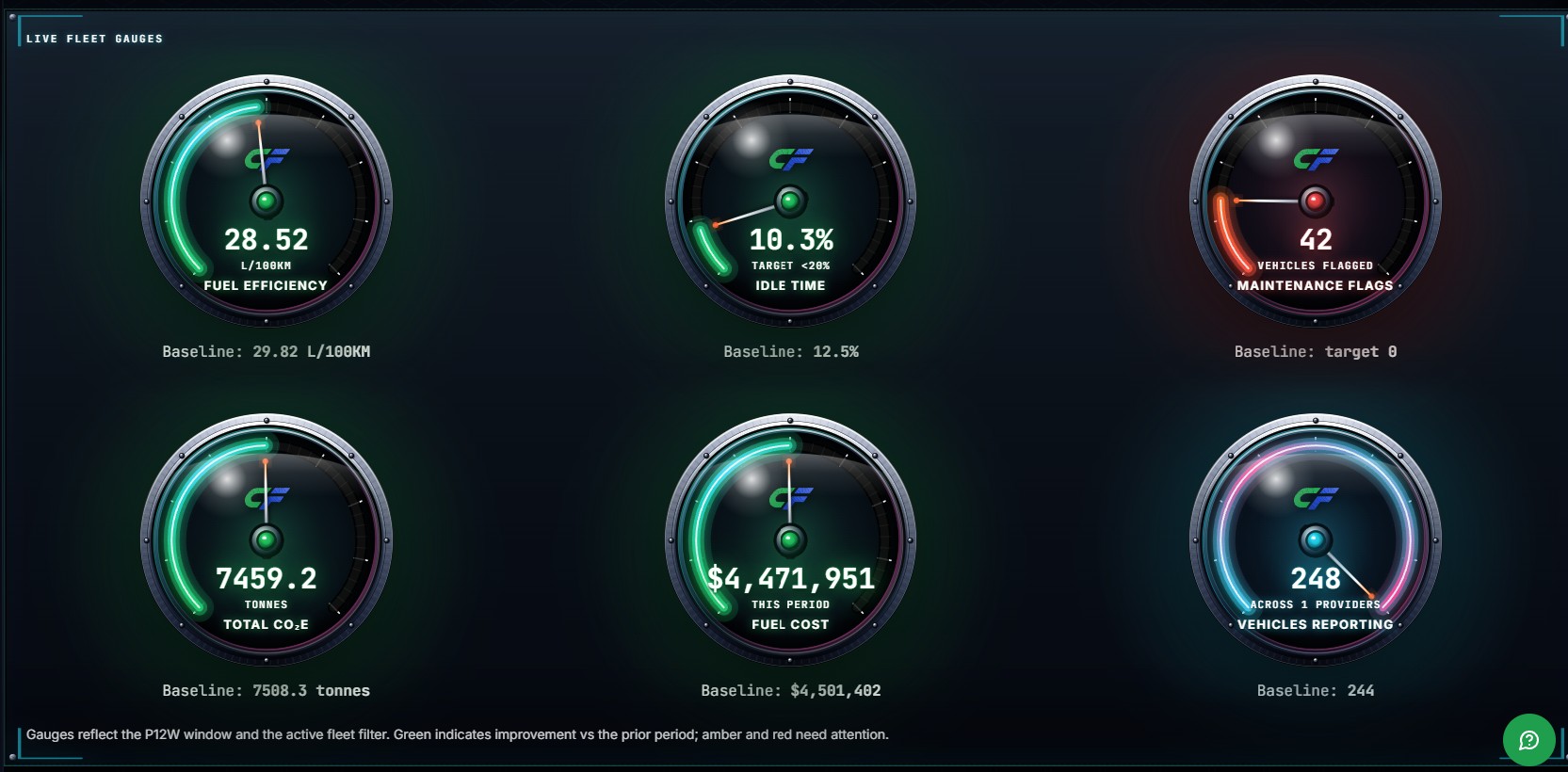
How to Find Fuel Waste in a Trucking Fleet Using CleanFreight.ca
Fuel waste in trucking fleets is rarely caused by one single problem.
It usually shows up across several areas: excessive idling, underperforming trucks, rising fuel consumption, inefficient dispatch decisions, maintenance issues, or vehicles that slowly drift from their normal performance.
The challenge is not always collecting the data. Most fleets already have telematics data.
The challenge is knowing where to look first.
This guide shows how fleet owners, operations managers, and maintenance teams can use CleanFreight to identify fuel waste, rank the highest-cost issues, and turn fleet data into action.
Step 1: Start with recoverable savings
Begin on the main CleanFreight dashboard.
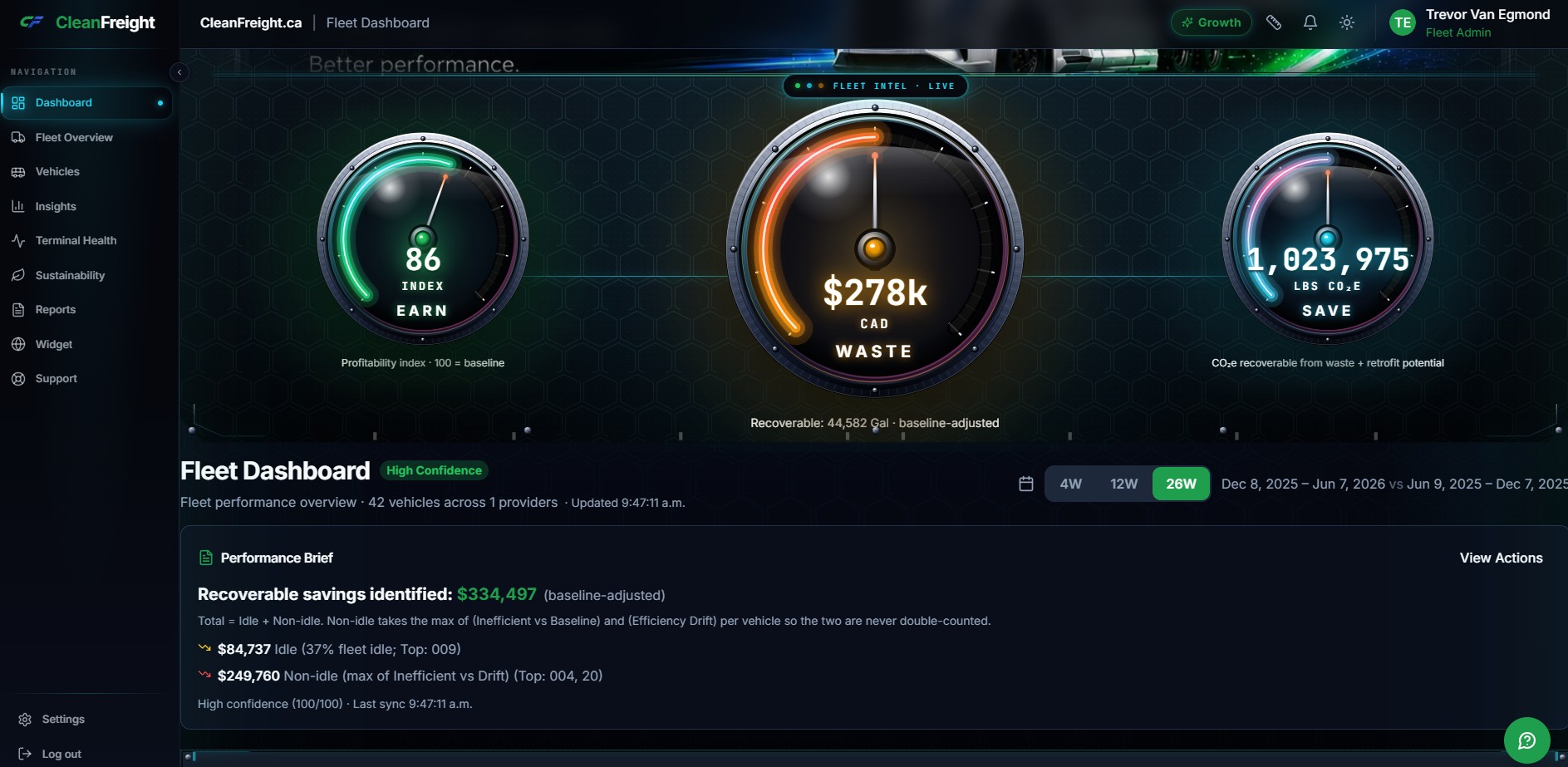
The first number to review is total recoverable savings. This gives management a high-level view of how much fuel waste may be available to recover across the fleet.
Look at the split between:
- idling savings
- non-idle fuel savings
- average idle time
- fuel economy
- overall fleet efficiency
- CO₂ savings potential
This top-level view helps answer the first question:
How much money may be hiding in the fleet?
Step 2: Separate idle waste from non-idle waste
Idle waste is usually easier to understand. If a truck is sitting with the engine running, fuel is being burned without moving freight.
But idle is only part of the problem.
Non-idle waste can be just as important. This includes fuel lost while trucks are operating due to poor efficiency, mechanical issues, inefficient dispatching, poor utilization, or trucks performing worse than their expected baseline.
CleanFreight separates these categories so fleets can see whether the problem is coming from:
- excessive idle time
- inefficient operating performance
- high fuel consumption
- asset-level drift
- maintenance-related issues
- dispatch or utilization decisions
This matters because the fix depends on the cause.
An idle issue may require driver coaching or idle policy review. A non-idle efficiency issue may require maintenance, reassignment, or closer investigation.
Step 3: Compare the current period against the previous period
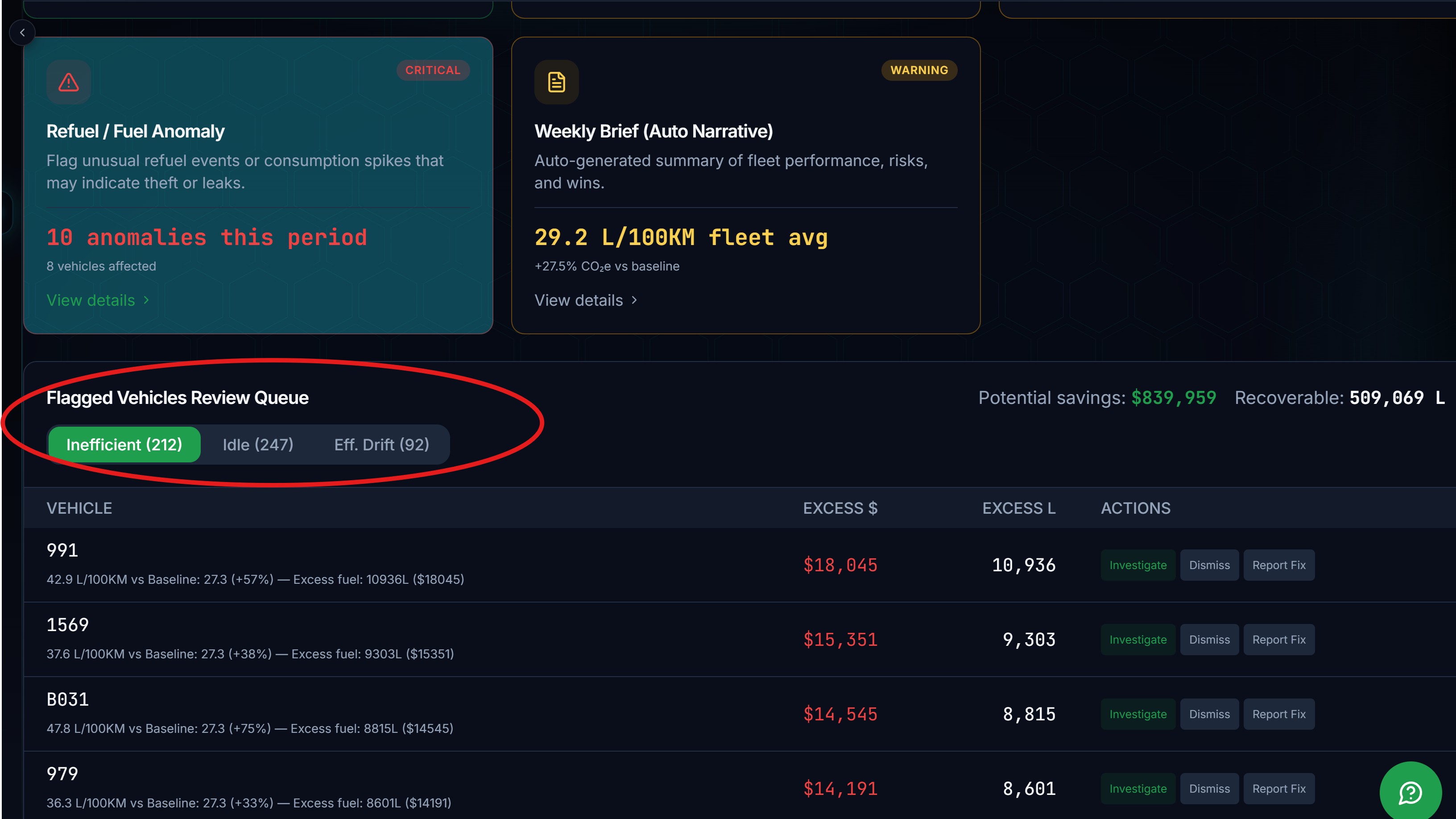
Next, open the Fleet Overview page.
Use the available comparison windows to identify changes over time:
4 weeks vs previous 4 weeks 12 weeks vs previous 12 weeks 26 weeks vs previous 26 weeks
These comparison windows help show whether performance is improving or getting worse.
A fleet should look for:
- fuel use increasing
- fuel economy declining
- idle time rising
- certain trucks drifting from expected performance
- recoverable savings growing
- recurring high-cost vehicles
This is where fuel waste becomes easier to spot. Instead of looking at one static report, CleanFreight shows how the fleet is changing.
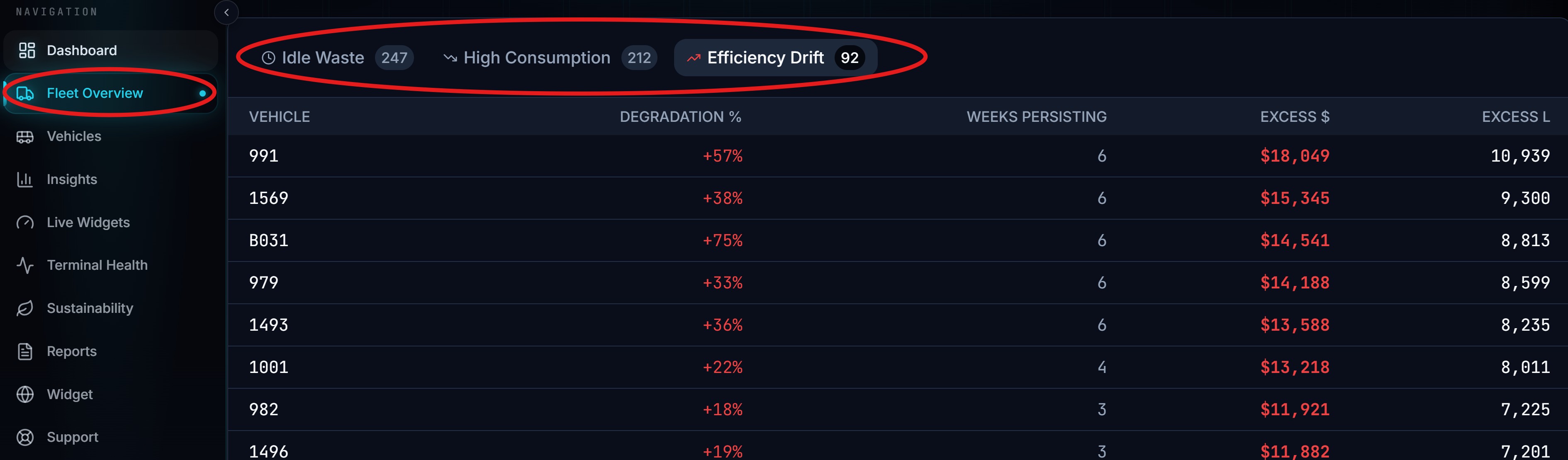
Step 4: Review vehicles flagged for high fuel use
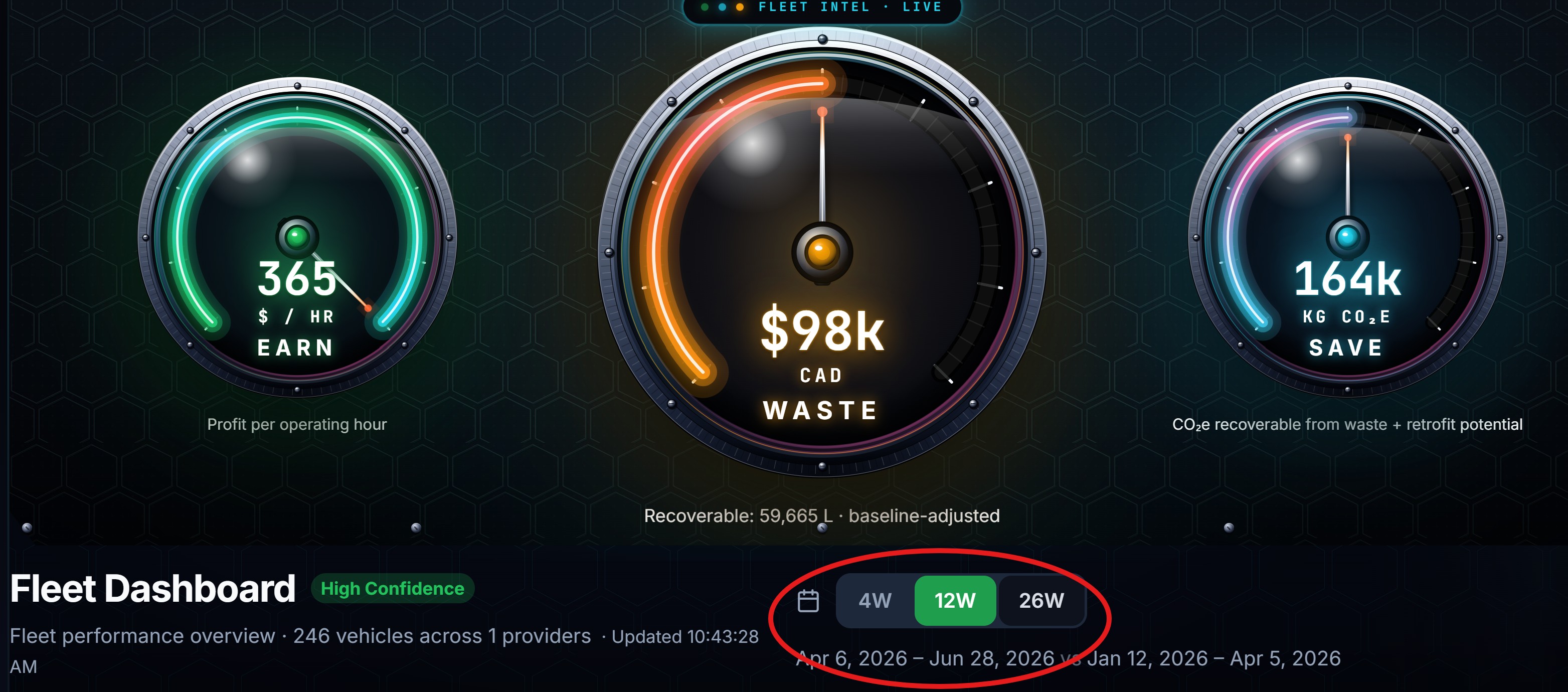
Once the fleet-level trend is clear, move to the vehicle list.
CleanFreight flags vehicles that show high fuel use or poor performance compared to expected results.
Start with the highest-dollar issues first.
For each flagged truck, review:
- estimated dollar impact
- fuel use
- fuel economy
- idle time
- operating pattern
- efficiency trend
- comparison against fleet average
- comparison against the truck’s own historical baseline
The goal is to identify which vehicles are costing the fleet the most money.
Not every issue needs immediate action. But high-cost vehicles should be reviewed first because they usually offer the fastest return.
Step 5: Investigate idle waste
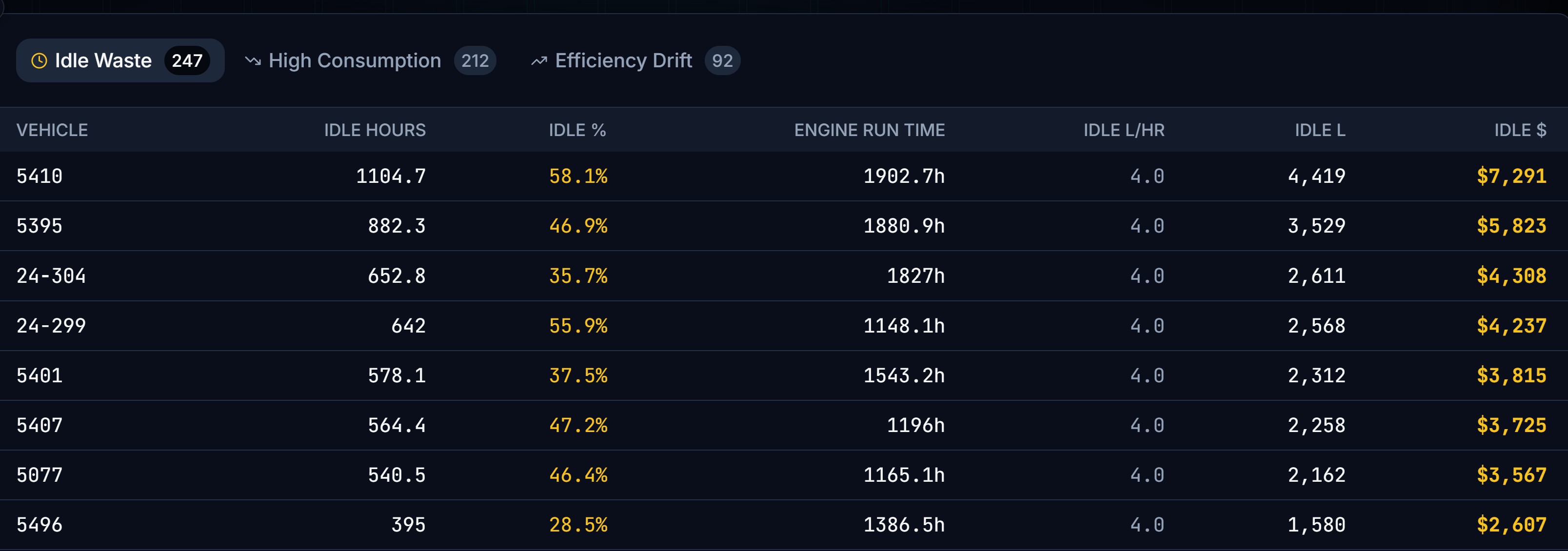
Open the idle waste section for a flagged vehicle.
Review the vehicle’s idle time and the estimated fuel cost connected to that idle time.
Compare the vehicle’s idle percentage against the acceptable threshold.
If the truck is above target, the fleet should determine whether the idling is explainable or avoidable.
Common causes may include:
- driver habit
- heating or cooling requirements
- waiting time
- loading or unloading delays
- sleeper berth use
- PTO operation
- poor dispatch timing
- lack of anti-idling equipment
If the idle is avoidable, create an action to reduce it.
The goal is not to eliminate all idling. The goal is to identify unnecessary idle cost and reduce what can reasonably be controlled.
Step 6: Investigate high fuel consumption
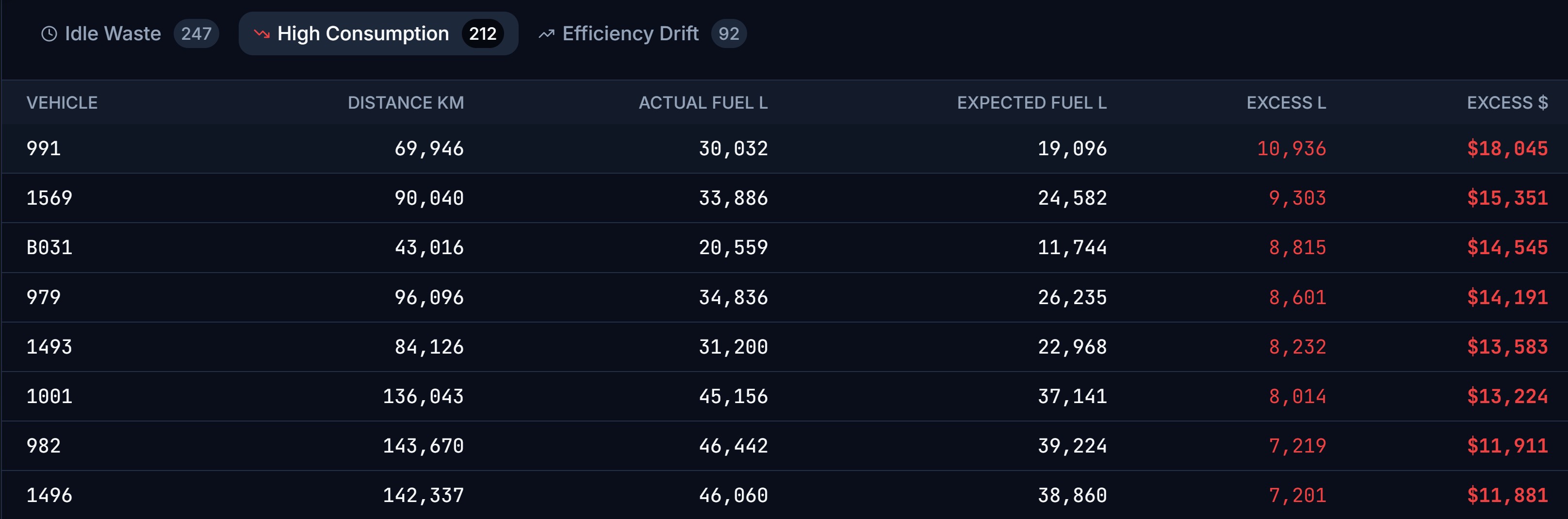
Next, review the high consumption section.
This shows whether a truck is using more fuel than expected compared to fleet performance or baseline expectations.
Look for trucks that are consuming more fuel than similar assets.
The key question is:
What would this vehicle save if it performed closer to the fleet average?
This can help management decide whether the truck should be:
- inspected
- reassigned
- monitored
- removed from long-haul work
- compared against similar duty cycles
- reviewed for driver behavior or route pattern issues
In some cases, dispatch can use this information immediately.
More efficient trucks should be prioritized for longer routes where the savings impact is higher. Less efficient trucks may be better suited for shorter or lower-impact assignments until the issue is resolved.
Step 7: Look for efficiency drift
Efficiency drift is one of the most important signs of hidden fuel waste.
A truck may not be the worst performer in the fleet, but it may be getting worse compared to its own previous performance.
That is a different problem.
Efficiency drift can point to issues such as:
- tire pressure problems
- wheel alignment
- engine performance issues
- emissions system problems
- increased rolling resistance
- maintenance needs
- duty cycle changes
- driver behavior changes
CleanFreight helps identify trucks that have become significantly less efficient over time.
These vehicles should be reviewed by maintenance or operations before the fuel loss continues for months.
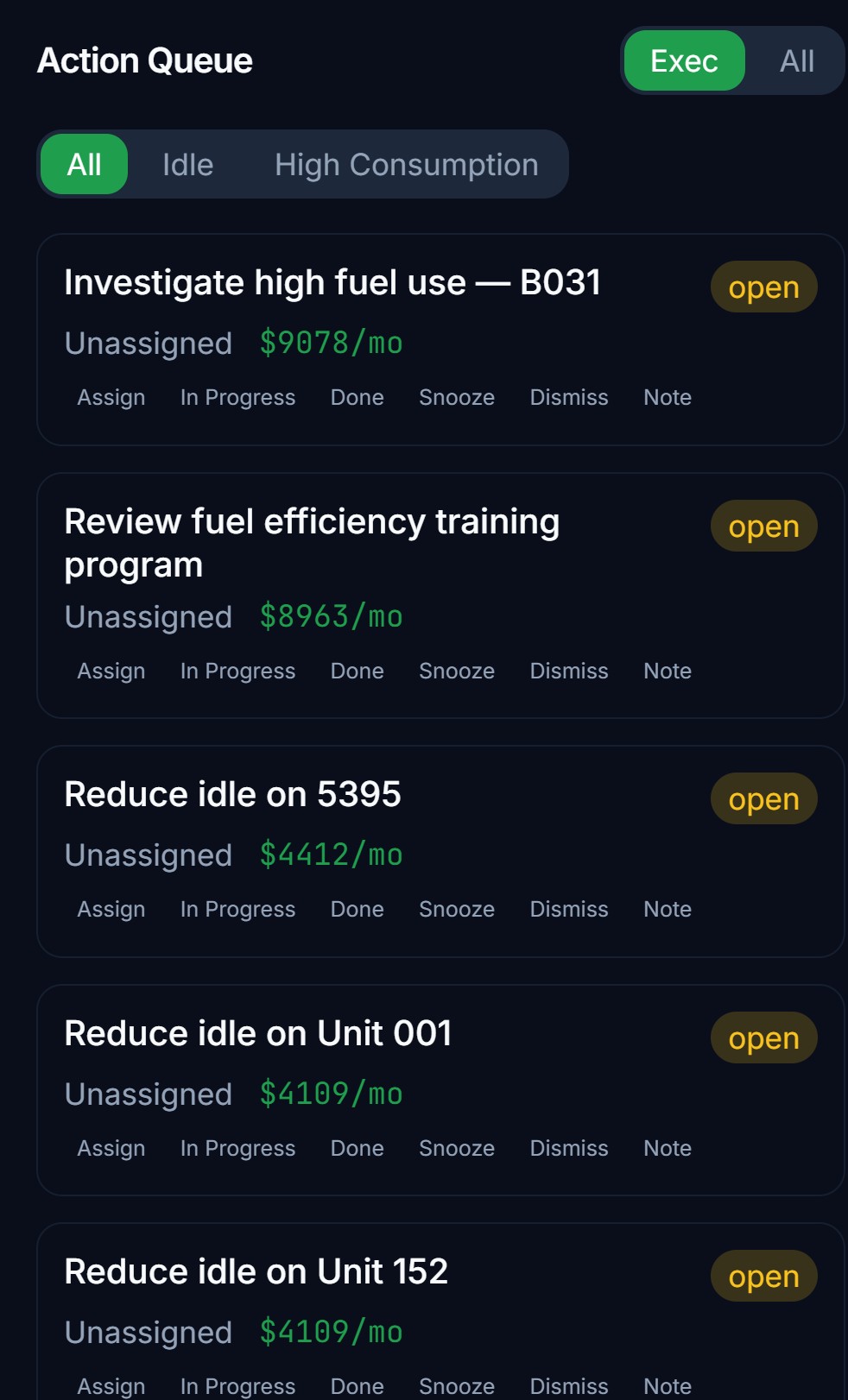
Step 8: Use the Action Command Center
Finding fuel waste is only useful if the fleet acts on it.
Use the Action Command Center to assign issues to the right person or department.
Actions can be:
- assigned
- snoozed
- dismissed
- documented with notes
- tracked through resolution
This helps prevent fuel issues from sitting in a report without follow-up.
For each action, the fleet should document:
- the issue
- the assigned owner
- the expected next step
- the reason for dismissal, if dismissed
- the repair, coaching, or operational change completed
- whether savings improved afterward
This creates accountability and makes fuel savings easier to manage.
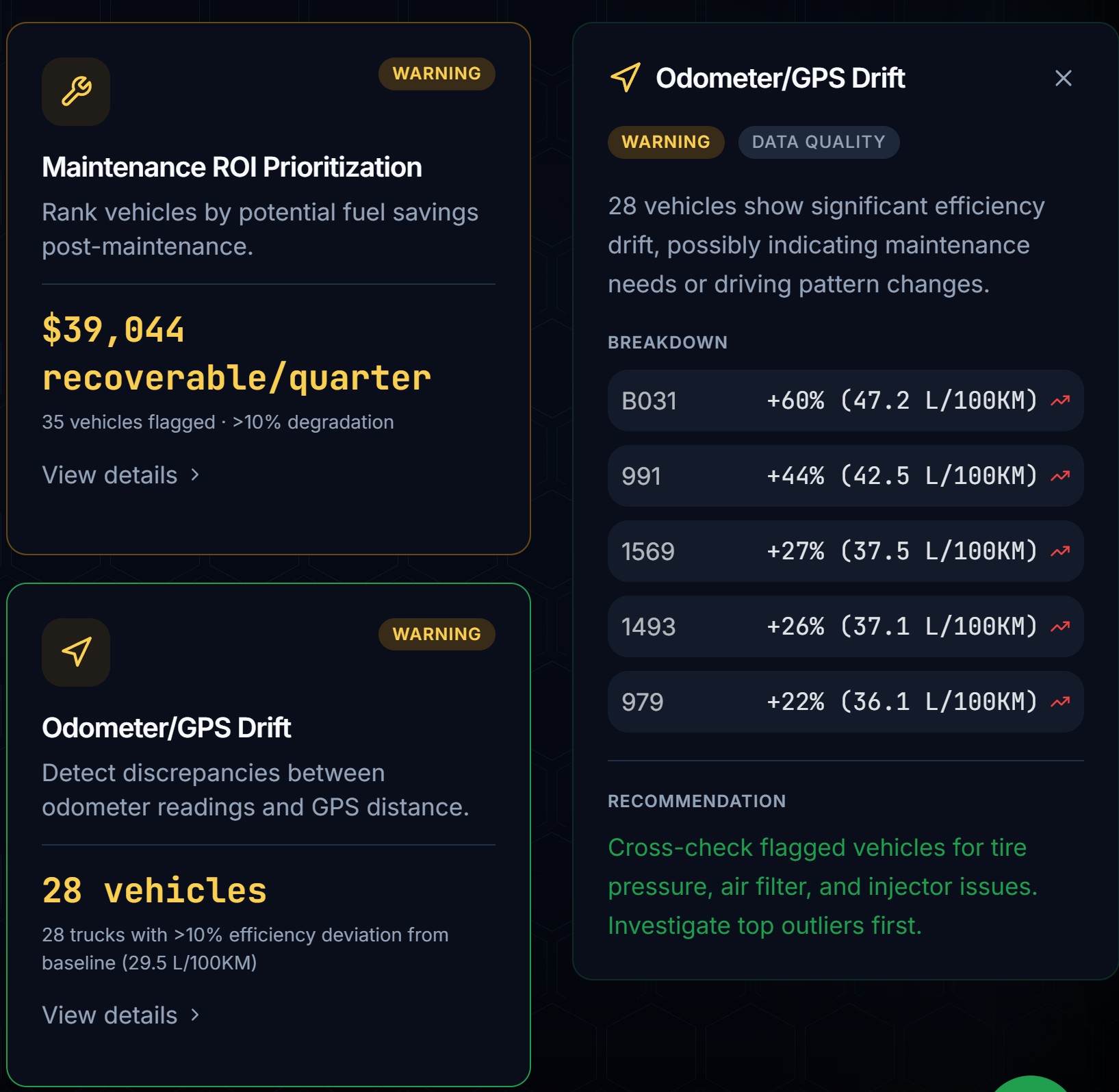
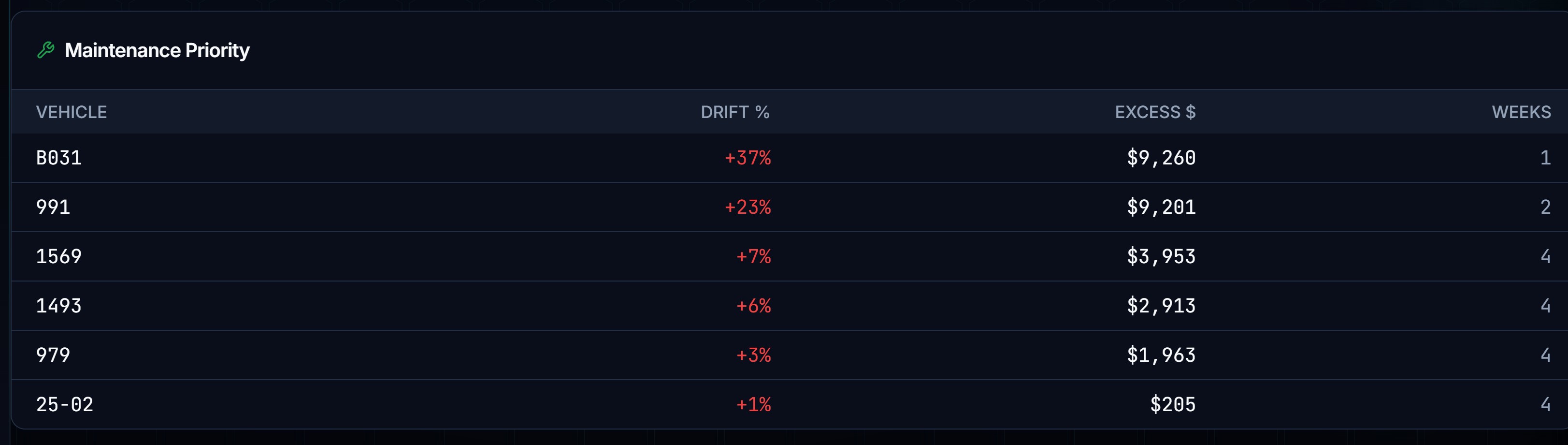
Step 9: Prioritize maintenance based on savings potential
Maintenance teams are often overloaded. CleanFreight helps prioritize which trucks should be reviewed first based on potential savings impact.
Start with vehicles that show:
- high recoverable savings
- efficiency drift
- poor fuel economy
- unusual fuel consumption
- persistent high idle
- repeated performance flags
The goal is to focus maintenance time where it can protect the most margin.
A small mechanical issue can become expensive if it causes weeks or months of unnecessary fuel burn.
Step 10: Review weekly and track improvement
Fuel waste should not be reviewed once per year.
It should be reviewed weekly.
CleanFreight updates the fleet view so managers can see whether fuel performance is improving, declining, or staying the same.
A weekly review should answer:
What changed this week?
Which trucks are still creating fuel waste?
Which issues were resolved?
Which actions produced savings?
Where should the team focus next?
This turns fuel management into a regular operating process instead of a one-time analysis.
Final takeaway
Finding fuel waste in a trucking fleet does not require a new hardware system.
Most fleets already have the data.
The key is turning that data into a clear view of idle waste, non-idle waste, high fuel consumption, efficiency drift, maintenance priorities, and recoverable savings.
CleanFreight helps fleets find the money faster by analyzing existing telematics data and showing which vehicles, behaviors, and operating patterns deserve attention first.
The result is a more practical fuel management workflow:
Find the waste. Rank the opportunity. Assign the action. Fix the issue. Track the savings.
Ready to find fuel waste in your fleet?
CleanFreight helps trucking fleets identify recoverable fuel savings, asset performance gaps, idle waste, non-idle waste, and Scope 1 emissions opportunities using the data they already have.
Visit CleanFreight.ca or CleanFreight.io to learn more.
Free tool
Estimate your fleet's recoverable savings
Enter your fleet size and annual fuel spend to see what a 3%, 5%, and 8% recovery is worth for your operation.
One-time report
See what your own fleet is wasting
A Fleet Fuel Waste Assessment turns 12 months of your telematics data into one report: how much fuel is recoverable, where it goes, and the 10 trucks to fix first. CA$499, one time.
Join the platform and get CA$100 back. Subscribe to the CleanFreight platform within 30 days of your report and CA$100 of what you paid for the assessment comes off your first platform invoice.